
Associate Professor Ali Zamanifard
Full-Time Faculty Member
Dr. Ali Zamanifard is an Associate Professor in the Department of Conservation and Restoration of Historical Buildings and Fabrics at the University of Art. Born on November 27, 1974, in Nahavand, Iran, Dr. Zamani Fard has dedicated his career to the preservation and conservation of cultural heritage.
His academic journey includes a Ph.D. in Architecture and Urban Planning with a specialization in Conservation and Restoration of Historical Buildings and Fabrics from Grenoble University, France. Additionally, he holds a Master's degree and Bachelor's degree in the same field from the University of Art, Tehran, and the Cultural Heritage Higher Education Center, respectively. Zamani Fard is a valuable member of the academic community, serving as a faculty member at the University of Art since May 2011. His expertise extends to various memberships, including ICOMOS Iran, the Scientific Society of Museums, Conservation, and Restoration of Historical Artifacts, and the Technical-Legal Commission of the Supreme Council of Cultural Heritage, Tourism, and Handicrafts.
His notable achievements include authoring a book, "La conservation des villes historiques," and publishing numerous research articles in esteemed journals. Dr. Zamani Fard has actively supervised 30 Master's theses and three doctoral dissertations, demonstrating his commitment to nurturing academic talent. Engaging in impactful research projects, he has significantly contributed to defining concepts and structures related to the Historical Cities Atlas of Iran.
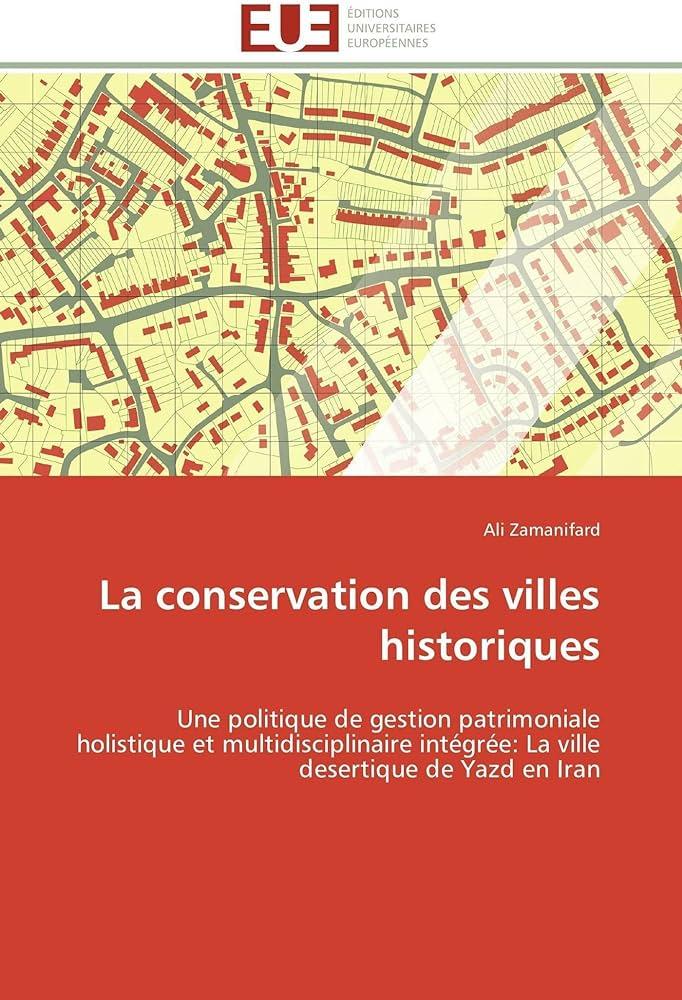
La conservation des villes historiques
This thesis addresses the question of the conservation of historic cities in central Iran, mainly built in raw earth, now less adapted to changing lifestyles and inserted into a modern, extensive and fragmented urban fabric. The thesis reveals the close relationships between the historic city, its domestic architecture, traditional society, its social and family structure, customs such as ceremonies and festive rites which run through the life of the urban population. Heritage is clearly studied here through the prism of its history and the values of traditional society which aspires to both modernity and the conservation of its cultural heritage, thus having to confront antagonistic and complex issues to integrate its heritage into a process of cultural and social evolution.
Faced with the challenges of the development of the modern city, the tourism industry and globalization, the preservation of the cultural, social, economic and scientific values of historic Iranian cities, to transmit a heritage exposed to a high risk of degradation due to major changes, to developments which induce requalification at different scales (architecture, city and territory), constitute a major challenge for Iranian society. As a result, the research analyzes the specific qualities of a heritage which has defined its characters in a close and harmonious relationship with a desert environment.
It demonstrates that it would be appropriate to rely on knowledge and know-how of great proven intelligence but today threatened with extinction while they remain fully relevant to the challenges of sustainable development. As a concrete illustration, the thesis uses the case study of the city of Yazd, particularly representative of the issues covered by the research and at the heart of the paradox between urban development and conservation. It highlights the need for an integrated, holistic and multidisciplinary approach for the conservation of historic cities in central Iran.
La conservation des villes historiques
Une politique de gestion patrimoniale holistique et multidisciplinaire intégrée: La ville désertique de Yazd en Iran (French Edition)
The book reveals the close relationships between the historic city, its domestic architecture, traditional society, its social and family structure, customs such as the ceremonies and festive rites which run through the life of the urban population. Faced with the challenges of the development of the modern city, the tourism industry and globalization, the preservation of the cultural, social, economic and scientific values of historic Iranian cities, to transmit a heritage exposed to a high risk of degradation due to major changes, to developments which induce requalification at different scales (architecture, city and territory), constitute a major challenge for Iranian society. As a concrete illustration, the book takes up the case study of the city of Yazd, particularly representative of the issues covered by the research and at the heart of the paradox between urban development and conservation. It highlights the need for an integrated, holistic and multidisciplinary approach for the conservation of historic cities in central Iran.